History
-
This presentation explores the strange and often contradictory world of anti-Masonic conspiracy literature, drawing on historical sources and modern examples to reveal how Freemasonry has been alternately vilified, romanticised, and misunderstood. Inspired by an essay by Australian journalist David Greason, this lecture traces the evolution of anti-Masonic thinking across Britain, America, Russia, and beyond, highlighting…
-
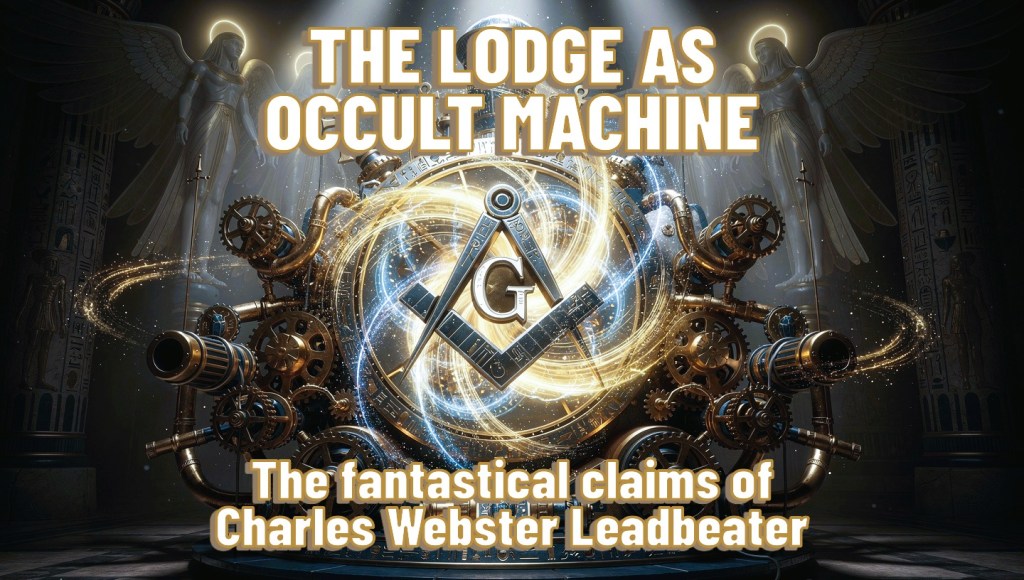
In this extended lecture, we explore one of the most extraordinary texts of early twentieth-century esotericism: The Hidden Life in Freemasonry (1926) by Charles Webster Leadbeater. A towering figure within the Theosophical Society and Co-Masonic circles, Leadbeater claimed that modern Masonic ritual is not merely symbolic but the vestigial survival of an ancient Egyptian initiatory…
-

Few symbols in the Third Degree speak with such austere eloquence as the Hour-Glass and the Scythe. Though familiar to generations of American Freemasons, these emblems are—perhaps unexpectedly—comparatively modern additions, shaped by the ritual innovations of Thomas Smith Webb and visually disseminated through the Doolittle engravings in Jeremy Cross’s True Masonic Chart. Yet their deeper…
-
Good evening Quarrymen This weekend learn why two of the most familiar symbols in the American Third Degree aren’t as ancient as you think—and their true story is far stranger, darker, and far more revealing. From Webb’s ritual innovations to Egyptian reaping knives, from the Fates’ shears to the apocalyptic sickle in Revelation, these emblems…
-
Long before Solomon’s Temple, before the tools of the builder became moral symbols, there was another origin story—one almost forgotten. In 1723, the Reverend James Anderson claimed that Noah and his sons were the first Freemasons, keepers of geometry and divine order who rebuilt civilisation after the Flood. This episode explores Anderson’s extraordinary idea that…
-
Good evening Quarrymen Was Freemasonry founded by King Solomon—or by Noah himself? In 1723, the Reverend James Anderson published The Constitutions of the Free-Masons and made a startling claim: that the Craft began long before Abraham, when Noah and his sons built the Ark “according to the Rules of Masonry.” In Anderson’s vision, all humanity…
-
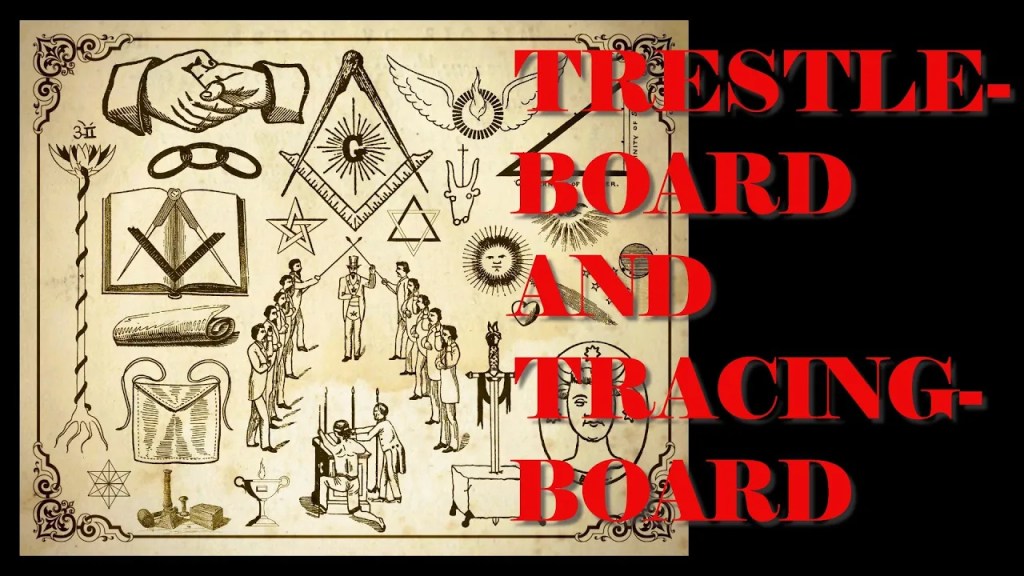
What is the true difference between the Trestle-Board and the Tracing-Board—two terms often spoken together but rarely understood? This 1932 Short Talk Bulletin unravels the fascinating history of these symbolic tools of the Craft, tracing their evolution from the chalk-drawn plans of operative builders to the moral designs of speculative Freemasonry. Discover how the trestle-board…
-

What is the true origin of the Craft? Beyond its moral allegories and social history lies a stream of teaching as old as civilisation itself — the Ancient Wisdom. This lecture traces that lineage from the Golden Age of myth through the Mysteries of Egypt, Greece, and Jerusalem, revealing how their sacred science survives within…
-
A timeless exploration of one of Masonry’s most enduring symbols — the Ashlar. In this classic lecture by J. Fairbairn Smith, Editor Emeritus of the Detroit Masonic World, the transformation from Rough Ashlar to Perfect Ashlar becomes a powerful allegory of moral refinement and spiritual craftsmanship. Join us From the Quarries as we uncover the…
-
From a candlelit initiation in Boston in 1775 to the solemn unity of Masons at Congressman John Lewis’s funeral in 2020, this film traces the extraordinary journey of Prince Hall Freemasonry—a brotherhood born from exclusion that became one of the most powerful moral institutions in African-American history. Told with historical precision and reverence, it follows…
-
In ‘Secrecy’, an anonymous Masonic author reflects upon one of the Craft’s most elusive virtues—the sacred art of silence. Through meditative prose, the essay distinguishes Masonry’s private discipline of secrecy from mere concealment, portraying it instead as a spiritual method: the quiet shaping of character, the sanctification of fellowship, and the reverent guarding of truth.…
-
This video taken from a 1904 lecture by Rudolf Steiner explores one of the most profound legends in the Rosicrucian tradition—the story of Solomon, Hiram Abiff, and the building of the Temple. Drawing on Biblical archetypes, Hermetic philosophy, and the Temple Legend, the narrative traces the two great lineages of humanity: the Sons of Cain,…
-
This lecture explores the history of Freemasonry in Russia, from its first appearance in the eighteenth century to its re-establishment in the late twentieth century. We trace the earliest lodges under Peter the Great’s successors, the flourishing of the Craft under Catherine II, and the dramatic suppression of Nikolai Novikov’s publishing empire. We follow the…
-
Good evening Quarrymen This weekend’s lecture traces the history of Freemasonry in Russia. It is a story marked by repeated cycles of growth and suppression: from the lodges of the eighteenth century, through Catherine the Great’s crackdown, the Decembrist movement, the long silence of the Soviet period, and the re-establishment of the Grand Lodge of…
-
William Hutchinson’s The Spirit of Masonry (1775) is one of the most influential works of eighteenth-century Freemasonry—an official, Grand Lodge-endorsed vision of the Craft as a moral and philosophical system. In this lecture, Hutchinson traces Masonry’s roots through the Essenes, the mysteries of Greece, medieval knighthood, and the philosophy of Pythagoras, showing how ancient wisdom…
-
✨ Coming This Saturday, 20 September ✨ Freemasonry in the eighteenth century was not merely convivial—it was a moral and philosophical system rooted in the wisdom of the ancients. In this week’s video, we explore William Hutchinson’s The Spirit of Masonry (1775), focusing on his account of the Essenes, the Eleusinian Mysteries, and the great…
-
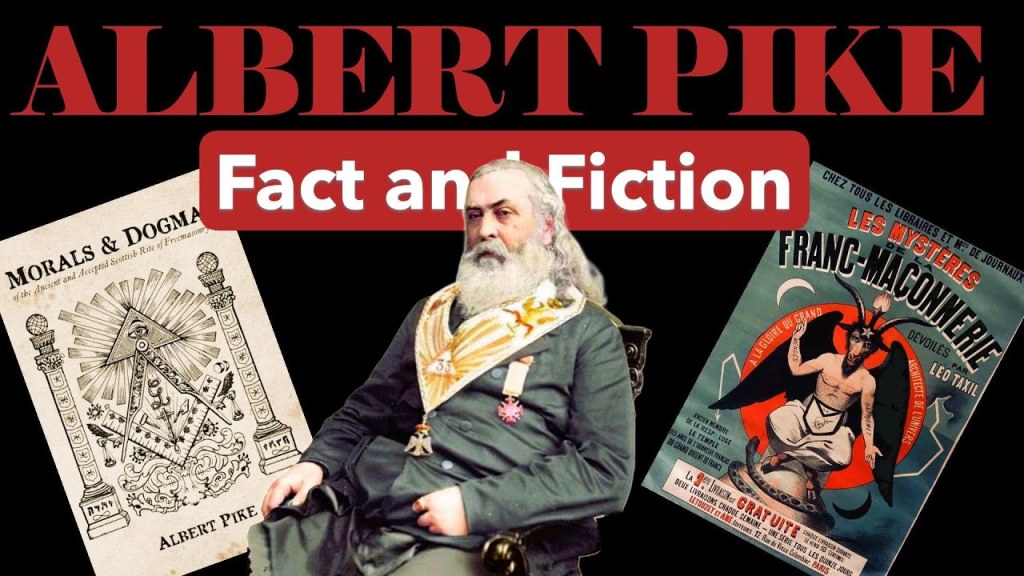
Albert Pike’s name inspires both admiration and condemnation—and rightly so. He was a gifted linguist and philosopher, but also a Confederate officer, nativist politician, and outspoken opponent of racial inclusion. His great Masonic text, Morals and Dogma, has been accused of preaching Lucifer-worship, a claim rooted not in Pike’s words but in a nineteenth-century hoax.…
 From the Quarries